Investing · 9 min read
Short-Term Rental Regulations in San Antonio, Explained
San Antonio Property Pro
Atlas image · Investing
Short-term rental regulations in San Antonio are real, specific, and easy to get wrong if you copy what works somewhere else. Short-term rentals, think Airbnb and Vrbo, are legal inside the city, but every unit needs a permit from the city, the rules split sharply between owner-occupied and investor-owned properties, and a blockface density cap decides whether a given street has room for you at all. Here is how the ordinance works today, from the permit and the owner-occupancy split to the taxes, plus the layers most first-time hosts forget.
Short-term rental regulations in San Antonio start with a permit
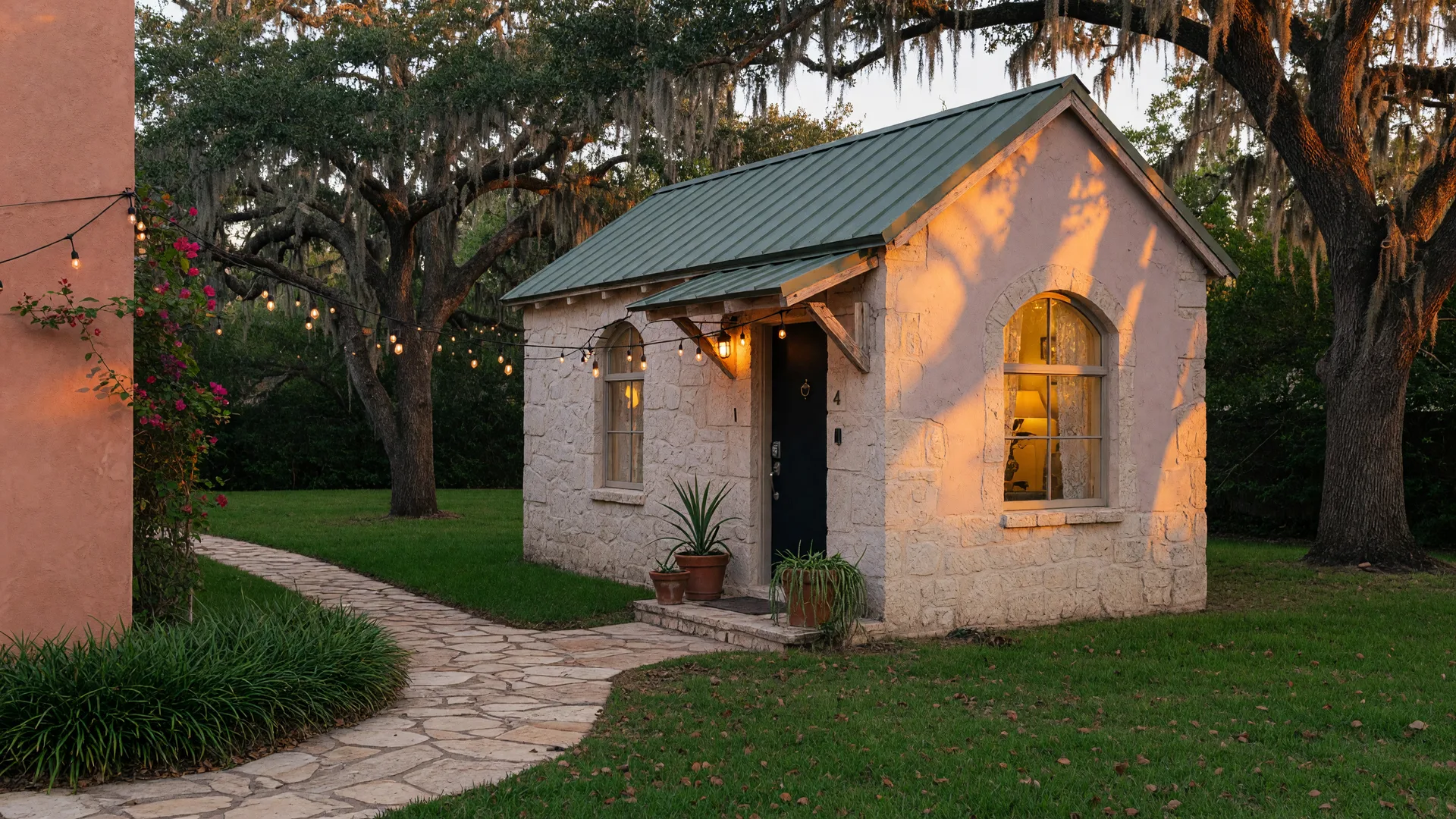
If a home sits inside San Antonio city limits, any rental of fewer than 30 consecutive days is a short-term rental, and it needs an STR permit from the city's Development Services Department. That applies to a whole house, a guest casita, or a spare room. The permit runs three years, costs $300 for a Type 1 and $450 for a Type 2, is non-transferable, and covers one unit. The city aims to issue permits within about five business days of a complete application, but running the taxes and reading the HOA rules before you apply is the part that actually takes time.
Type 1 vs. Type 2: the owner-occupancy split that decides everything
Every permit falls into one of two buckets, and the bucket changes your math completely. A Type 1 short-term rental is owner-occupied: the operator lives at the property as a legal residence, shown through things like a homestead exemption, voter registration, or vehicle registration. Type 1 units face no density cap, so the casita behind your own front door is the friendliest path into short-term rentals in San Antonio. A Type 2 permit covers a unit the operator does not occupy, and that is where the city's rules get genuinely restrictive.
The blockface cap: one-eighth of the block, no more
Type 2 permits are capped by blockface, one side of a street between two intersections. In single-family districts no more than 12.5 percent, one-eighth, of the homes on a blockface may be short-term rentals. On a typical eight-home block that works out to one investor-owned short-term rental, and a shorter block may allow none at all. Multifamily buildings of five to seven units can hold one, and larger buildings allow 12.5 percent of their units. When a block is already at its cap, the only path forward is a special exception from the Board of Adjustment, and that is a fight you want to know about before you buy, not after.
What changed in the 2024 updates
The rules in force today are the June 2024 amendments to the ordinance San Antonio first adopted back in 2018. Permit fees went up, from $100 to $300 for Type 1 and from $250 to $450 for Type 2. Platforms like Airbnb and Vrbo now remove listings that do not display a valid city permit number. Hosts must give guests written quiet-hours notices. And the city widened its window for citations to three years. Texas has no statewide short-term rental law that overrides city codes, so each city's ordinance is the one that counts, and San Antonio's keeps tightening.
The tax side: 16.75 percent every time a guest checks in
Short-term rentals in San Antonio collect hotel occupancy tax on top of whatever income and property taxes you already pay, and the combined rate is 16.75 percent: 6 percent to the state of Texas, 9 percent to the city, and 1.75 percent to Bexar County. Platforms like Airbnb collect the state and city portions at booking in most cases, but hosts still file monthly tax reports with the city, and direct bookings are entirely on you to report and remit. Add property taxes and insurance, and the tax picture is a real line in the cash-flow math of an investment short-term rental, not a footnote.
Mortgage, HOA, and insurance: the layers the ordinance does not touch
The city code is only one layer. Most conventional mortgages are written for owner-occupied homes, so using a property for short-term rentals, and especially buying one as a non-owner-occupied unit, changes your lending options and your rate. Loop in your lender before you make an offer. HOA covenants in communities like Stone Oak, The Dominion, or Fair Oaks Ranch can simply ban short-term rentals, whatever the city allows. And a standard homeowners policy does not cover guest claims, so a proper short-term rental policy is not optional. I check all three layers for clients before they commit, because an address can be ordinance-clean and still a practical non-starter.
City limits vs. Boerne, New Braunfels, and the Hill Country
Everything above applies inside San Antonio city limits, including right up through Stone Oak and the Loop 1604 corridor. Cross the city line and you are in a different world. Unincorporated Bexar County land has no city STR permit to pull at all. And each town writes its own code: New Braunfels runs its own registration system, Boerne, Helotes, and Bulverde enforce their own rules, Fair Oaks Ranch sits under the HOA-heavy covenants common in the Hill Country, Schertz and Cibolo on the I-35 side have their own ordinances, and out in the Hill Country proper the answer depends on the exact town or county. The one constant from the Alamo City to the rivers and hills: check the exact address, because short-term rental regulations are municipal right down to the block.
Thinking about putting a home or casita to work as a short-term rental? The address answer comes first. Send me the address and I will walk through the permit, the blockface cap, the taxes, and the HOA layer before you spend a dollar, and point you toward current listings in San Antonio and the Hill Country while you decide.
Let's run the numbersWritten by San Antonio Property Pro
Local San Antonio real estate guidance for buyers, sellers, and investors. The details above are general information, and your specific street always deserves a specific look.
Keep reading
All insightsBuying · 8 min
Alamo Heights Homes for Sale, Street by Street
Alamo Heights homes for sale sit on oak-canopied streets with a school district that sells itself. Here is the street-by-street guide to prices, blocks, and what buyers actually pay.
Read
Homeowners · 7 min
Build a Casita (ADU) in San Antonio: What Homeowners Should Know
Since 2023 San Antonio has let homeowners add a casita to almost any single-family lot by right. Here is how the size rules, owner-occupancy rule, and permitting actually work, plus the construction details that matter on our clay soil.
Read