Buying · 8 min read
Alamo Heights Homes for Sale, Street by Street
San Antonio Property Pro
Atlas image · Buying
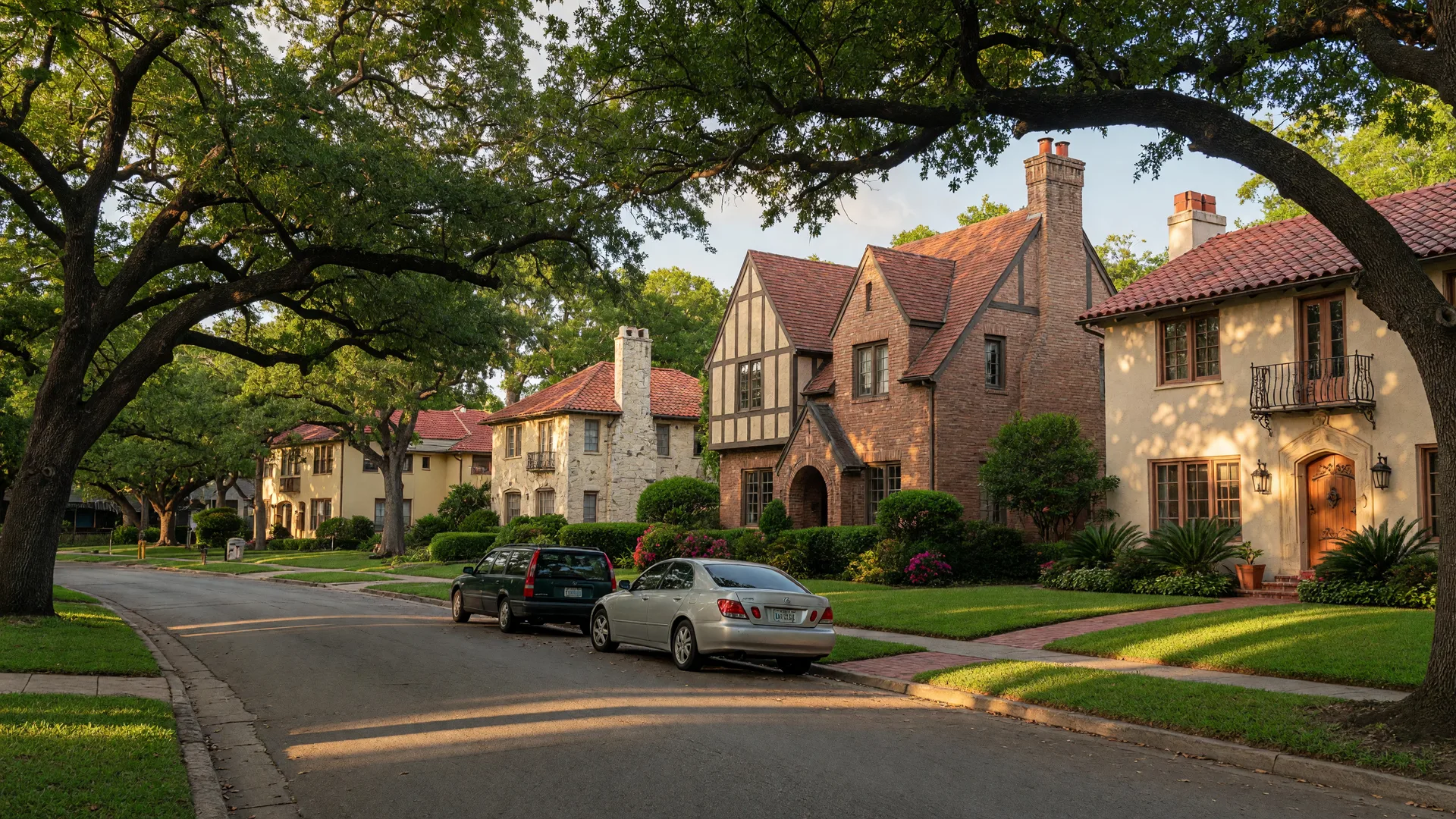
Alamo Heights homes for sale are the classic San Antonio upgrade: tree-lined streets, brick Tudors and Spanish Revival houses from the 1920s and 1930s, and a school district families know by name. It is also a market where street by street is the only honest way to shop, because value changes block to block more than it does almost anywhere else in the city. Here is the Alamo Heights tour, from the Broadway corridor to the quiet oaks, with the prices and inspection realities I see as a San Antonio agent and licensed home inspector.
Alamo Heights homes for sale, by the numbers
Start with the big picture. Alamo Heights is a compact place, roughly two square miles about five miles north of downtown, and most of it lives in the 78209 zip code. Redfin's mid-2026 data put the median sale price around $700,000, down a hair from a year earlier, while the average home value runs closer to $718,000. What those averages hide is the range: entry-level bungalows and ranch homes can start in the mid-$500,000s, while historic estates and modern renovations routinely clear $1.5 million. Inventory is thin because turnover is low, and the buyers who move here often pay cash or put down serious conventional loans. This is not a market you shop by price range alone. You shop it by street.
Broadway: the spine of the neighborhood
Broadway is Alamo Heights' main street, the dining and shopping corridor that gives the neighborhood its walkable center, with restaurants, boutiques, and the everyday errands that make the car optional on weekends. It is also the address for vertical living: the 4242 Broadway tower, roughly twenty stories of condominiums, is often the most affordable door into the zip code for buyers who want Alamo Heights ISD without a big yard. Around Broadway you are also minutes from the McNay Art Museum, Brackenridge Park, and the San Antonio Zoo, the trio of anchors that make this pocket of the city feel like a small town with a real downtown.
The oak-lined core: where the classic houses live
The heart of Alamo Heights, the reason people talk about the neighborhood in the first place, is the web of quiet streets between Broadway and the school campuses. This is where you find the housing stock that defines the area: craftsman bungalows, Spanish Revival houses with tile roofs, mid-century contemporaries, Mediterranean estates, and ranch homes, most of them shaded by live oaks that took root decades before you were born. Streets like Hiler Road, College Boulevard, Court Circle, and Rosemary Avenue carry much of the residential inventory, and each one has its own feel: a short cul-de-sac behaves differently from a block that funnels school traffic twice a day. Lot size, tree canopy, and elevation change lot to lot, and on a rainy day you can see which lots drain well and which ones hold water. That is exactly the kind of detail a walk through the block reveals and a map never shows.
Austin Highway and Nacogdoches: the working edges
The neighborhood is framed by two busier roads worth understanding. Austin Highway runs along the north and west edge, with shops and medical offices that make it a practical corridor, and Nacogdoches Road does the same on the east side, closer to the creek greenway. Homes along these edges tend to be the older, smaller stock in the neighborhood, which usually means a more accessible price for the same school district. The trade-offs are real: more traffic noise, smaller lots, and sometimes a house that genuinely needs renovation. For a buyer who wants the schools and the address at the entry price, the edges are where the opportunity hides, as long as the condition is priced honestly.
Why the schools move this market
Alamo Heights ISD is the single biggest driver of demand in this neighborhood, and it is the reason families cross the city to look here. The district draws buyers from all over Bexar County, and walkability to the campuses is a genuine selling point: parents love the idea of kids walking to school down shaded streets instead of riding the bus for an hour. For the market, that means a premium that shows up at every price point, from bungalows to estates. It also means the calendar matters: the strongest demand lands in late winter and spring, when families are planning for the next school year.
Inspection notes on a 90-year-old neighborhood
This is where my inspector background earns its keep. Much of Alamo Heights' housing stock dates from the 1920s through the 1950s, which means old plumbing, old electrical, and roofs at the end of their lives, all of it hidden under fresh paint in the listings. The ground is San Antonio's expansive clay, so foundations move, and a hundred-year-old live oak a few feet from the slab can be doing more to your foundation than the list price suggests. Add the damp crawlspaces and aging sewer lines that come with an old neighborhood, and the rule of thumb becomes simple: never pay for a renovation you cannot verify, pay for a well-maintained original, and always get your own inspection rather than trusting the seller's. In Alamo Heights, the condition gap between a well-cared-for house and a tired one can be a six-figure number.
The investor read on Alamo Heights
For investors, Alamo Heights is a different animal from the north-side rental corridors: lower month-one yield, dramatically higher stability. Price per square foot runs in the high three hundreds on recent asking prices, and the low turnover means a well-priced house sells without the discounting games you play elsewhere. Land is the quiet asset: on the strongest streets, the dirt is worth as much as the house, which makes teardowns and renovations attractive to a certain kind of buyer. Rents follow the schools, so the demand floor is solid, but the entry price is high enough that the cash-flow math has to be done with today's interest rates in front of you. Where Alamo Heights shines for an investor is appreciation and desirability over time, not cash flow in month one.
The bottom line
Alamo Heights homes for sale reward buyers who do their homework street by street. Start with the broad numbers: a median around $700,000 and thin inventory. Walk Broadway for the neighborhood's pulse, the oak-lined core for the classic houses, and the Austin Highway and Nacogdoches edges for the accessible entries. Weigh the schools, which drive the premium, budget for the realities of an older house on clay soil, and if your plan is long-term value, know that this is one of the most stable addresses in San Antonio for exactly that. Bring patience, a good inspector, and a clear idea of the street you want, and Alamo Heights is hard to beat.
About the author: Chris Schmeis is a San Antonio real estate agent and investor with eXp Realty, a Certified Professional Real Estate Inspector in Texas, and an owner of multiple investment properties and land holdings. He writes this blog to give clients the plain-talk version of the numbers that matter.
Looking for Alamo Heights homes for sale? Text or call me, Chris at eXp Realty, and I will pull the current listings on your target street, walk the comps with you, and give you an honest read on the house before you write an offer.
Let's run the numbersWritten by San Antonio Property Pro
Local San Antonio real estate guidance for buyers, sellers, and investors. The details above are general information, and your specific street always deserves a specific look.
Keep reading
All insightsHomeowners · 7 min
Build a Casita (ADU) in San Antonio: What Homeowners Should Know
Since 2023 San Antonio has let homeowners add a casita to almost any single-family lot by right. Here is how the size rules, owner-occupancy rule, and permitting actually work, plus the construction details that matter on our clay soil.
Read
Buying · 8 min
Buying New Construction in San Antonio: The Fine Print Before You Sign
New builds are everywhere across Bexar County right now, and builders are competing hard for buyers. Here is what actually matters in the contract: base price vs. final price, incentives with strings, inspections, warranties, and the tax bill that arrives with the keys.
Read