Buying · 8 min read
Buying New Construction in San Antonio: The Fine Print Before You Sign
San Antonio Property Pro
Atlas image · Buying
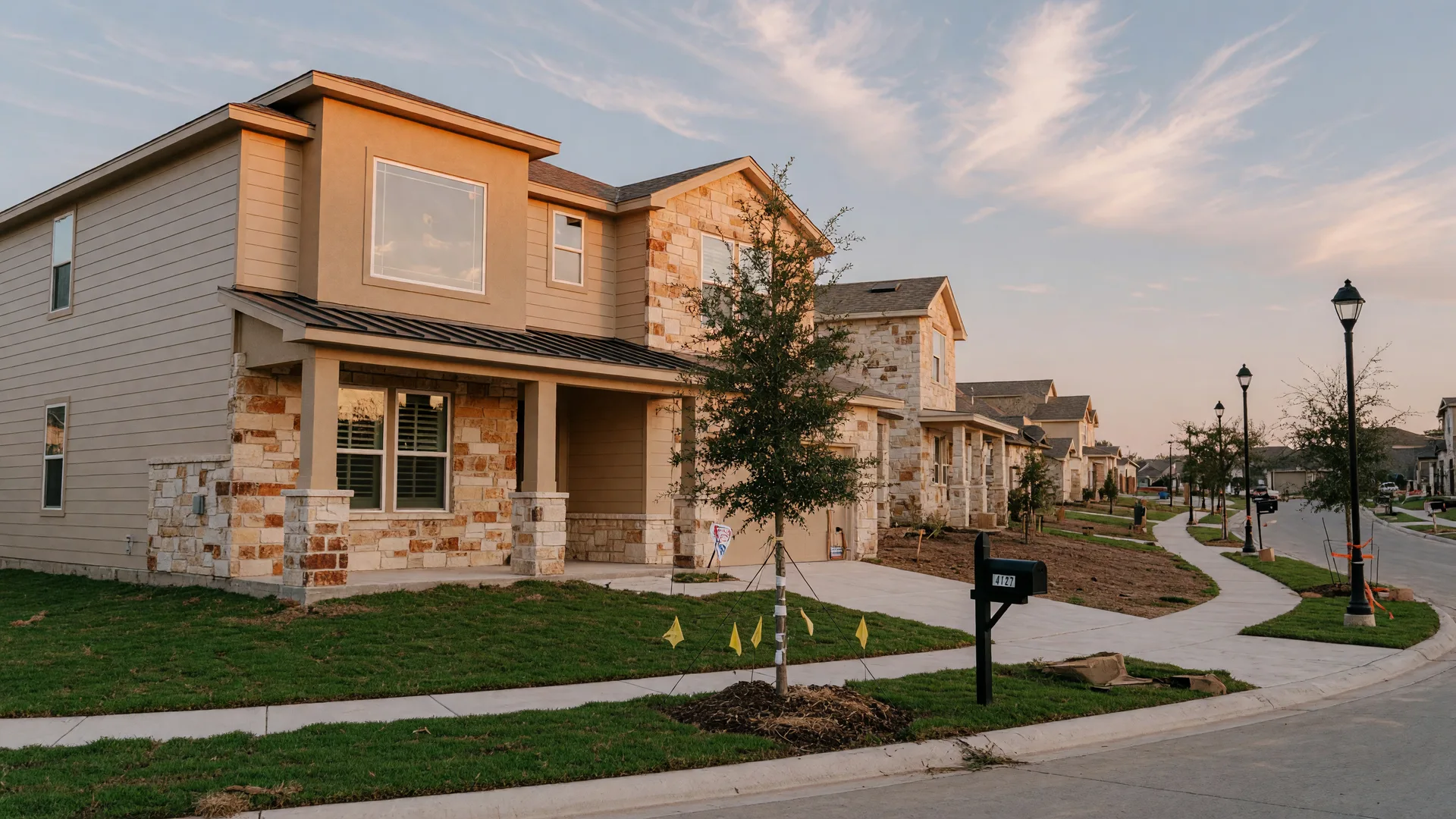
New construction is a big part of how San Antonio grows, and this year those new homes sit in a buyer's market: builders are offering incentives, and buyers have room to negotiate. But a new build is not a resale with fresh paint. The price in the brochure is not the price at closing, the warranty has pages of exceptions, and the first tax bill can be a surprise. This guide walks through the fine print that actually matters before you sign anything.
The new home market has its own music right now
The resale market in San Antonio cooled into a buyer's market, and the new home side cooled with it. As of 2025, new home sales in the metro fell about 8.5 percent for the year, and the average price of the new homes that closed crept up to around $324,000 by year end, according to Zonda data reported by the San Antonio Express-News. That matters to you in one good way: builders need buyers more than buyers need any one builder. A national survey found about two-thirds of builders offering incentives, and in San Antonio the packages are real. Most of the new inventory is going up on the far west and south sides and in the growth corridors toward Converse, Schertz, and New Braunfels, so your choices are concentrated where the dirt is cheaper and the commute is longer.
The base price is the appetizer, not the meal
The number in the builder's ad is the base price: the smallest floor plan on the smallest lot with the standard finishes. Almost no one closes at that number. The lot premium, the elevation upgrade, the extra square footage, and the design center add on top, and it is easy to watch the final price climb 15, 20, even 25 percent over the number that brought you to the neighborhood. That is not a trick, it is just how the model home works, but you should see the full options list before you fall in love with the model. Ask for the price sheet with your floor plan, your lot, and the finishes you actually want, and budget against that number, not the ad.
Incentives are real, and some come with strings
In today's market builders sweeten the deal with rate buydowns, cash toward closing costs, and upgrade credits, and those are genuine money. The fine print: some packages require using the builder's preferred lender, so compare the rate you are offered against a quote from a lender of your own before you sign. A buydown is only a good deal if the underlying rate is fair. Also ask which way the credit can go, toward the rate buydown, toward closing costs, or toward upgrades. Learn the value in dollars, not in the brochure, and treat the incentive as part of your negotiation, not a favor.
The dirt under the house is the first thing you buy
San Antonio sits on expansive clay, and a new slab built on it lives or dies by the way the site was prepared and graded. Before you sign, ask how the builder handled the soil and the drainage. Walk the lot on a wet day if you can: standing water near the slab is a problem, no matter how new the address is. New communities also grade for drainage as a whole, so a house at the low end of a street can be the one that collects runoff, even with the nicest floor plan in the neighborhood. That falls squarely in my lane, and the questions are worth asking in the design center, before the slab is poured.
Inspect a home nobody has lived in yet
A brand new home can still leak, settle, or simply be finished badly, and the builder's own quality check is not the same as an independent inspection. Hire your own inspector, not one referred by the sales office, and try to catch the big stages: the foundation and slab, the framing before the drywall goes up, and a final inspection shortly before closing. On a production home the framing check is the one that pays, because that is when you can still see the studs, the insulation, and the wiring. It costs a few hundred dollars per visit, and it is the best warranty you can buy: the paper kind only covers what gets caught.
The 1-2-10 warranty and its own fine print
Most Texas builders offer a tiered new home warranty: one year on workmanship and materials, two years on major systems like plumbing, electrical, and HVAC, and up to ten years on major structural defects. This document is a real page, with exclusions for neglect, normal wear, and more, so request the actual warranty text before you sign, not a pamphlet. There is a new wrinkle: Texas law now allows builders to cap structural coverage at six years if they provide a qualifying written warranty, so the years your warranty actually promises live in the document, not in the sales pitch. Know what the warranty says, in writing, before you commit.
The tax bill arrives with the keys
Your first property tax bill on a new build is often bigger than expected. Texas caps how fast your home value grows, but the year after a new home is completed it counts as a new improvement, so it can be assessed at full market value without the cap, and your first years' math includes that. The homestead exemption is still your friend: file it with the Bexar Appraisal District between January 1 and April 30 of the year after you buy. New communities also often sit inside special districts, like municipal utility districts, that add lines to the tax bill that older streets do not carry. A new home's tax rate is higher than the resale house next door in many cases, so pull the actual rate and the districts before you budget the monthly payment.
The timeline runs longer than the model tour
A resale closes in 30 to 45 days; a new build follows the builder's schedule. A move-in-ready home can close in about two months, a production home typically four to seven months, and semi-custom builds longer, and closing can slip if construction slips. Plan for the delay in your lease and your rate lock. If the builder offers a rate at the time of signing, ask how long that rate holds, whether it can be extended, and what the price is if construction runs long.
The bottom line
A new home in San Antonio is a good way to buy in today's market, as long as you shop the whole package: price the total, separate the incentive from the rate, watch the dirt and the drainage, bring your own inspector to the big stages, read the warranty years, and budget the first real tax bill. Do all six and your new build is the deal it is sold as; skip one and the fine print finds you later.
About the author: Chris Schmeis is a San Antonio real estate agent and investor with eXp Realty, a Certified Professional Real Estate Inspector in Texas, and an owner of multiple investment properties and land holdings. He writes this blog to give clients the plain-talk version of the numbers that matter.
Looking at a new build or a resale in San Antonio? Text or call me, Chris at eXp Realty, and I will help you price the package, read the contract, and line up the inspections before you sign.
Let's run the numbersWritten by San Antonio Property Pro
Local San Antonio real estate guidance for buyers, sellers, and investors. The details above are general information, and your specific street always deserves a specific look.
Keep reading
All insightsBuying · 8 min
Alamo Heights Homes for Sale, Street by Street
Alamo Heights homes for sale sit on oak-canopied streets with a school district that sells itself. Here is the street-by-street guide to prices, blocks, and what buyers actually pay.
Read
Homeowners · 7 min
Build a Casita (ADU) in San Antonio: What Homeowners Should Know
Since 2023 San Antonio has let homeowners add a casita to almost any single-family lot by right. Here is how the size rules, owner-occupancy rule, and permitting actually work, plus the construction details that matter on our clay soil.
Read