Selling · 9 min read
How to Stage a Home to Sell in San Antonio
San Antonio Property Pro
Atlas image · Selling
Staging a home to sell in San Antonio is not about making a house look like a magazine. It is about helping a buyer see themselves living there, and in a buyer's market that is worth real money. The latest numbers from the San Antonio Board of Realtors put the median sale price near $299,000, with homes averaging 82 days on the market and selling at about 93 percent of their original list price. This guide walks through the room-by-room plan I give sellers, what staging actually costs, and where it earns its keep across the metro, from Alamo Heights to the Hill Country.
Why staging matters more in a buyer's market
San Antonio is a buyer's market right now, and the numbers are plain about it. The San Antonio Board of Realtors' latest report shows the median sale price holding around $299,000, homes spending an average of 82 days on the market, and sellers collecting about 93 percent of their original list price, with roughly six months of inventory on the books. Buyers have choices, and choices make presentation matter. A house that shows well gets the showing, the second look, and the offer; a house that shows tired gets skipped even when the price is right. Staging will not fix an overpriced listing, but it is the cheapest way to make sure your house is judged on its best day, not its most cluttered one.
How to stage a home to sell in San Antonio, room by room
The goal in every room is the same: neutral, bright, and easy to walk through, with each space clearly doing one job. Here is the order I walk sellers through, the same order buyers experience the house.
Curb appeal and the front door. The showing starts at the street. Mow, edge, trim, and clear the walkway; pressure-wash the driveway and porch; replace the tired welcome mat. In San Antonio the front door takes sun all afternoon, so a fresh coat of paint on a fading door is one of the cheapest fixes you can make. Buyers decide a lot about a house before they ever step inside, and the front porch is where that decision starts.
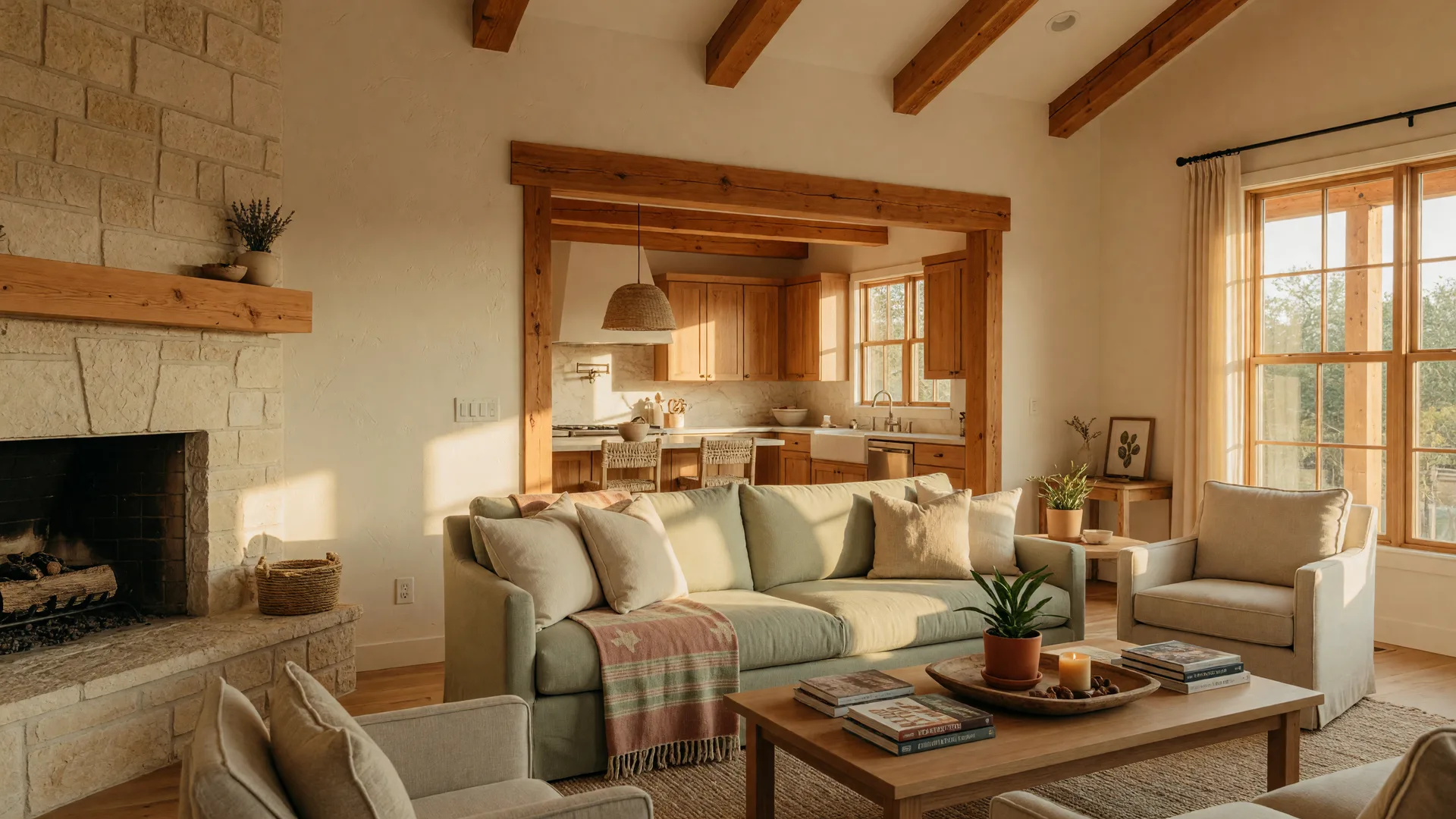
The living room. This is the room buyers photograph first and remember longest. Remove half the furniture, push the rest into a conversation circle, and open the curtains. Neutral walls, a clean coffee table with one or two objects, and a rug that anchors the seating read as calm and expensive. If the room has a fireplace, make it the focal point; in a Hill Country style house, that stone fireplace is the feature your staging should sell.
The kitchen. Kitchens sell houses, so clear the counters down to one or two items, empty the sink, and put away the small appliances. Clean the grout, polish the fixtures, and set the table for four even if you never eat there. A bowl of fruit or a wooden cutting board with a loaf of bread reads as lived-in without looking cluttered.
The primary bedroom. Buyers want to picture rest, so strip the room down to a bed, two nightstands, and a dresser. Make the bed with fresh, neutral linens, add one throw pillow and one folded blanket, and clear the floor. Closets matter here more than people expect: remove a third of what is inside so the closet reads as roomy.
Bathrooms. Deep-clean until they look new, replace caulk that has yellowed, hang fresh white towels, and put away every bottle. A bathroom that sparkles makes buyers assume the whole house has been cared for, which is exactly the assumption you want them to make.
The patio and backyard. San Antonio buyers live outside half the year, so the patio is a room, not an afterthought. Clean the furniture, add one potted plant or a small outdoor rug, and make the grill area presentable. In the Hill Country communities, from Boerne to Bulverde, the outdoor space is often the deciding feature, so give it the same staging attention you give the living room.
What staging costs, and what it buys
Professional staging in Texas typically runs from about $500 for a consultation and a few key pieces up to $5,000 for a full furniture package on a larger home. A staged vacant house costs more, because the furniture has to be rented, while an occupied house that is decluttered, depersonalized, and rearranged can be staged for a few hundred dollars or less. The National Association of Realtors' staging surveys consistently find that a majority of buyer's agents say staging makes it easier for buyers to picture the home as their own, and that staged homes tend to sell faster. In a market where the average home takes 82 days to sell and closes at 93 percent of list, shaving two or three weeks off that clock and protecting a point or two of the sale price is a return that beats almost any other money you can spend on the house.
What staging does not fix
Staging is presentation, not repair, and I am honest with every seller about the line between them. An overpriced house does not sell faster because it is pretty; it just sits longer and ends up priced down anyway. Foundation movement, an aging roof, an AC near the end of its life, and dated electrical panels all show up in the inspection, not the photos, and no throw pillow fixes them. The smart sequence is: fix the things that will surface in an inspection, price the house against recent closed sales, and then stage to make the strongest possible first impression. Get the pricing conversation right first, and staging becomes the polish that earns its keep.
Read how a San Antonio home gets its price, and why list price beats staging
See the full cost of selling in 2026, line by line
Staging across the metro: one market, different buyers
The staging playbook shifts with the buyer you are trying to reach. In Alamo Heights and Terrell Hills, buyers want established charm, so staging leans into the original details: the wood floors, the casement windows, the deep front porch. In Stone Oak and the family corridors toward Schertz and Cibolo, buyers are weighing schools and backyards, so the flex room staged as a playroom or home office and a tidy, fenced yard do the heavy lifting. In the Hill Country, from Boerne and Fair Oaks Ranch to Helotes and Bulverde, buyers are paying for the land and the lifestyle, so the porch swing, the fire pit, and the view out the back window are the features to sell. New Braunfels buyers, many of them weekenders and river people, respond to outdoor living and a low-maintenance finish. Staging is not one formula; it is knowing which buyer your house will attract and showing them exactly what they came for.
The staging checklist before the photographer arrives
Walk the house with fresh eyes, or better, with a friend who has never seen it. Declutter every surface, remove personal photos and collections, and box up anything you do not need for the next month. Deep-clean everything, including windows, baseboards, and light fixtures. Replace burnt-out bulbs with bright, warm light, and open every curtain for the photos. Fix the small stuff buyers notice: dripping faucets, squeaky doors, cracked outlet covers, a loose handrail. Then let the house breathe for a day and walk it again. If a room does not have an obvious purpose, give it one, because a buyer who cannot figure out what a room is for will not make an offer on it.
The bottom line
Staging a home to sell in San Antonio is the cheapest marketing you will buy, and in this market it is not optional. The houses moving right now are priced honestly, inspected and repaired in advance, and presented so a buyer can see their own life in them. Do the work before the photographer arrives, and you give your listing its best shot at the shortest days on market and the strongest sale price. Skip it, and you are asking buyers to do the imagining for you, and in a market with six months of inventory, most of them will simply move on to the next house.
About the author: Chris Schmeis is a San Antonio real estate agent and investor with eXp Realty, a Certified Professional Real Estate Inspector in Texas, and an owner of multiple investment properties and land holdings. He writes this blog to give clients the plain-talk version of the numbers that matter.
Browse San Antonio homes for sale right now
Thinking about selling in San Antonio, or in Boerne, New Braunfels, Schertz, Cibolo, Bulverde, Helotes, Fair Oaks Ranch, or the Hill Country? Text or call me, Chris at eXp Realty, and I will walk your house with an inspector's eye, tell you honestly what to fix and what to stage, and price it against the sales that actually closed on your street.
Let's run the numbersWritten by San Antonio Property Pro
Local San Antonio real estate guidance for buyers, sellers, and investors. The details above are general information, and your specific street always deserves a specific look.
Keep reading
All insightsInvesting · 9 min
San Antonio Investment Property: Cash Flow Basics for New Investors
How to run the numbers on a San Antonio investment property: real rents, vacancy, Bexar County taxes, landlord insurance, and the cash flow math that separates the 2026 deals that work from the deals that quietly lose money.
Read
Buying · 8 min
Tobin Hill Homes for Sale by the Pearl: A Neighborhood Spotlight
Tobin Hill homes for sale sit in San Antonio's most walkable pocket, wrapped around the Pearl: craftsman bungalows, new condos, the river's Museum Reach, and street life you do not need a car for. Here is the honest spotlight.
Read